Information
Focus on RHD Precision Industry - Get to know the new information of the industry quickly!


Focus on RHD Precision Industry - Get to know the new information of the industry quickly!
2026-08-08 17:34:36
AC generators, also known as alternators, are widely used in power generation systems, industrial equipment, wind turbines, and backup power systems. One important component that enables continuous electrical operation in many AC generators is the Slip Ring.
Many people ask: why are Slip Rings used in AC generators? The main reason is that Slip Rings provide a continuous electrical connection between the rotating part of the generator and the stationary external circuit, allowing current transfer while the rotor keeps rotating.
This article explains the working principle, functions, advantages, and applications of slip rings in AC generators.
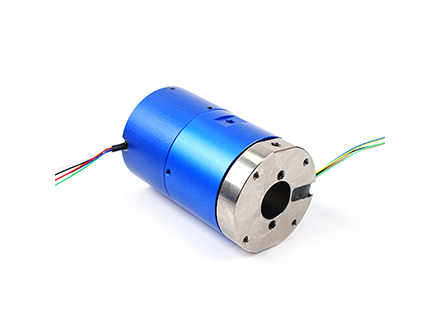
A slip ring is an electromechanical device designed to transfer electrical power or signals between rotating and stationary components.
In an AC generator, the slip ring is installed on the rotor shaft and rotates together with the rotor. Carbon brushes or conductive contacts remain stationary and maintain electrical contact with the rotating rings.
The main components of a slip ring include:
Conductive rings
Carbon brushes
Insulating materials
Rotating shaft assembly
This structure allows electrical current to flow continuously while the generator rotor is rotating.
Before understanding the role of slip rings, it is important to understand the basic working principle of an AC generator.
An AC generator converts mechanical energy into electrical energy through electromagnetic induction.
A mechanical force rotates the rotor.
The magnetic field of the rotor interacts with the stator windings.
Electromagnetic induction generates electrical current.
The generated electricity is transferred to the external circuit.
Because some components rotate while others remain stationary, a reliable electrical connection is required. This is where the slip ring plays an important role.
The primary function of a slip ring is to maintain electrical continuity while the rotor continues rotating.
Without a slip ring:
Wires connected to the rotating rotor would twist continuously.
Long-term rotation could damage electrical connections.
Power transmission would become unstable.
A slip ring provides a reliable rotating electrical interface that allows continuous current transfer.
Many AC generators require a magnetic field on the rotor to generate electricity. This magnetic field is created by supplying DC excitation current to the rotor winding.
Slip rings allow:
DC current transmission to the rotating field winding
Stable magnetic field generation
Continuous generator operation
This function is especially important in synchronous generators.
Generators often operate continuously in applications such as power plants, wind turbines, and industrial systems.
Slip rings allow the rotor to rotate for extended periods without interrupting electrical connections, improving:
Operating stability
Generator reliability
Overall system performance
Some generator applications require operation under changing rotational speeds, including:
Wind turbines
Hydropower generators
Industrial drive systems
A reliable Electrical Slip Ring helps transfer power and signals while maintaining stable performance under different operating conditions.
Slip rings and commutators are both used in rotating electrical machines, but their functions are different.
| Feature | Slip Ring | Commutator |
|---|---|---|
| Current Type | Mainly AC or excitation DC | Mainly DC conversion |
| Structure | Continuous conductive rings | Segmented copper sections |
| Function | Transfers current during rotation | Converts AC to DC |
| Application | AC generators | DC motors and generators |
| Contact Method | Brush contact | Brush switching |
AC generators typically use slip rings because they provide continuous current transfer without mechanical switching.
Standard electrical slip rings are commonly used for basic power transmission applications.
Reliable current transfer
Simple structure
Cost-effective design
Applications include:
Industrial generators
Small alternators
High current slip rings are designed for applications requiring higher electrical capacity.
Larger conductive rings
Improved heat dissipation
Enhanced contact performance
Applications include:
Large power generators
Heavy industrial equipment
Different generator designs may require customized slip ring solutions based on:
Voltage requirements
Current rating
Shaft dimensions
Rotation speed
Operating environment
A professional slip ring manufacturer can provide customized designs according to specific generator requirements.
Reliable Power Transmission: Slip rings provide stable electrical connections during continuous rotation.
Long Operating Life: High-quality slip rings can operate for extended periods with proper maintenance.
Flexible Generator Design: Slip rings allow the use of rotating field systems.
Improved System Performance: Stable current transfer helps reduce operational failures.
Wind turbines use slip rings to transfer:
Excitation power
Control signals
Sensor data
Large hydro generators use slip rings for:
Rotor excitation
Long-term operation
Stable power generation
Industrial generator systems use slip rings in:
Manufacturing equipment
Mining machinery
Large industrial systems
Marine generator systems use slip rings where reliable electrical transmission is required in rotating equipment.
Carbon brushes gradually wear because of continuous friction.
Solutions:
Regular inspection
Proper brush material selection
Dust, oxidation, and mechanical wear may affect electrical contact performance.
Solutions:
Regular cleaning
Maintenance checks
High-quality slip ring selection
Excessive current or poor contact may cause overheating.
Solutions:
Select the correct current rating
Improve cooling design
Consider:
Voltage rating
Current capacity
Number of circuits
Signal requirements
Check:
Rotation speed
Shaft size
Installation space
Operating conditions
For harsh environments, consider:
Dust protection
Waterproof design
Temperature resistance
Corrosion resistance
No. Some AC generators use brushless excitation systems and do not require traditional slip rings. However, many synchronous generators still use slip rings for rotor excitation.
A failed slip ring may cause poor electrical contact, unstable excitation current, reduced generator output, or system failure.
Carbon brushes provide electrical contact while reducing friction and wear during continuous rotation.
The service life depends on current load, rotation speed, materials, and maintenance conditions. High-quality slip rings can operate reliably for many years.

Phone: +86 13622631318
Email:info@reehonde.com
Add: Room 301, Building 1, No. 11, Dalingshan Lakeside South 1st Street, Dalingshan Town, Dongguan City, Guangdong Province, China
Copyright © 2026 Dongguan Rui-Hong-De Precision Industry Co., Ltd All rights reserved. Privacy policy | Terms and Conditions


