
A Slip Ring is used to transfer electrical power, signals, or data between a stationary part and a rotating part while allowing continuous rotation. It is commonly used in industrial equipment where cables would otherwise twist, wind, or become damaged during repeated rotation.
By providing a continuous electrical connection during rotation, Slip Rings help rotating equipment maintain stable power and signal transmission without limiting the rotation range.
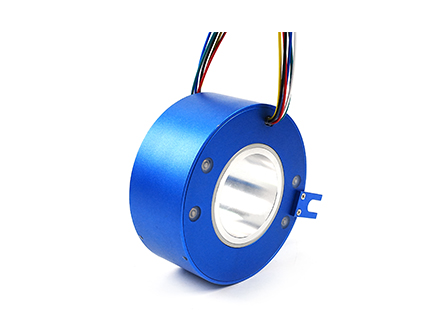
What Does a Slip Ring Do?
The main function of a slip ring is to maintain an electrical connection between stationary and rotating components. A typical slip ring consists of conductive rings and brushes or other contact components. As the equipment rotates, the contacts maintain electrical continuity between the fixed and rotating sides.
Depending on the design, a slip ring can transmit:
Electrical power
Control signals
Sensor signals
Analog and digital signals
Communication data
Low-current electrical signals
This makes slip rings useful for equipment that requires continuous rotation without interrupting electrical or signal transmission.
Where Are Slip Rings Used?
1. Industrial Automation Equipment
Slip rings are widely used in automated machinery with rotating components. They can transmit power and control signals while a rotary mechanism continuously operates, reducing cable twisting and improving system flexibility.
2. Rotary Tables
Rotary tables often require electrical power and control signals to reach rotating fixtures, sensors, or tools. A slip ring provides a compact solution for maintaining these connections during continuous rotation.
3. Robotics
Robotic systems may require electrical connections between fixed and rotating joints. Slip rings can help transmit power, sensor signals, and communication signals while allowing continuous movement.
4. Wind Turbines
In wind turbine systems, rotating components may need electrical and control signal transmission between stationary and rotating sections. Slip rings can be designed to operate under demanding environmental and operating conditions.
5. Packaging and Processing Machinery
Rotating packaging and processing equipment may require continuous electrical connections for sensors, heaters, motors, or control systems. A suitable slip ring can help prevent cable twisting during repetitive rotation.
6. Inspection and Testing Equipment
Rotary inspection systems may need to transfer measurement signals from rotating components to stationary control equipment. Slip rings provide a continuous connection without requiring the cable to rotate together with the equipment.
Why Use a Slip Ring Instead of a Cable?
A conventional cable can work well when rotation is limited. However, continuous or repeated rotation can cause a cable to twist, bend, and eventually fail.
A slip ring provides several advantages for rotating equipment:
Continuous rotation: Allows electrical transmission during continuous rotary movement.
Reduced cable twisting: Eliminates the need for cables to repeatedly wind and unwind.
Compact integration: Can be integrated into the rotary mechanism according to equipment requirements.
Power and signal transmission: Different circuits can be configured for power, control, and signal transmission.
Custom configurations: Circuit number, current rating, voltage, size, and other specifications can be designed according to the application.
What Can a Slip Ring Transmit?
The transmission capability depends on the slip ring design. Different models can be configured for different electrical requirements.
Common transmission requirements include power circuits, low-current control signals, sensor signals, and communication signals. For applications requiring multiple transmission functions, a customized slip ring can combine different circuits within one assembly.
What Should You Consider Before Choosing a Slip Ring?
The correct slip ring depends on the actual operating conditions of the equipment. Important parameters include the number of circuits, operating voltage, current, rotation speed, installation space, signal type, and environmental conditions.
For applications involving high temperature, dust, moisture, vibration, or other demanding conditions, the slip ring should be selected according to the specific working environment.
Custom Slip Ring Solutions
Standard slip rings may not always match the mechanical and electrical requirements of industrial equipment. Custom Slip Rings can be developed according to the equipment structure, installation dimensions, circuit requirements, transmission type, and operating conditions.
For OEM equipment manufacturers and system integrators, providing the equipment requirements at the design stage can help determine the appropriate slip ring configuration.
FAQ About Slip Rings
Can a slip ring transmit both power and signals?
Yes. Depending on the design, a slip ring can include separate circuits for power, control signals, sensor signals, or other electrical transmission requirements.
Can a slip ring rotate continuously?
Yes. Slip rings are designed to maintain electrical connections while the rotating component operates. The allowable rotation speed and service life depend on the specific design.
Are slip rings suitable for high-temperature applications?
Some slip rings can be designed for high-temperature operating environments. The contact materials, insulation materials, housing, and other components need to be selected according to the actual temperature range.
Can slip rings be customized?
Yes. Custom configurations can be developed for circuit number, current, voltage, dimensions, mounting structure, rotation speed, signal transmission, and environmental requirements.
Conclusion
A slip ring is mainly used to maintain electrical power or signal transmission between stationary and rotating components. From industrial automation and rotary tables to robotics and specialized machinery, slip rings provide a practical solution wherever continuous rotation and electrical connectivity are required.
If your equipment has specific requirements for current, voltage, rotation speed, temperature, dimensions, or signal transmission, a customized slip ring can be designed around the actual application.
Looking for a slip ring for your rotating equipment? Contact us to discuss your application and slip ring requirements.