
Choosing the right Slip Ring requires more than simply matching the product size. The slip ring needs to work with the electrical, mechanical, and environmental conditions of the rotating equipment.
Key factors include the number of circuits, current, voltage, rotation speed, signal type, installation space, operating temperature, and mounting method. Understanding these requirements before selection can help prevent transmission problems and mechanical compatibility issues.
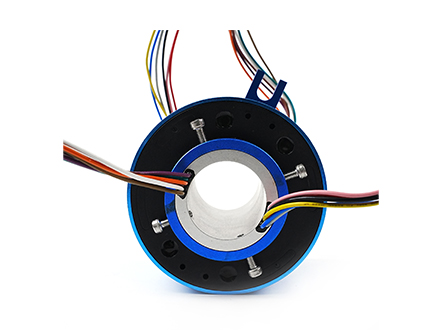
1. Determine What the Slip Ring Needs to Transmit
Start by identifying what needs to pass through the rotating connection. A slip ring may be used for electrical power, control signals, sensor signals, or communication data.
For example, a rotating machine may require several circuits for power and additional circuits for sensors or control signals. If multiple transmission types are required, the slip ring should be configured with the appropriate circuits for each function.
2. Check the Number of Circuits
The required number of circuits is one of the basic parameters when selecting a slip ring.
Count all electrical connections that need to pass from the stationary side to the rotating side. The required circuit number may include power circuits, signal circuits, grounding circuits, and dedicated communication channels.
It is generally better to determine the actual circuit requirements during the equipment design stage rather than selecting a slip ring based only on physical dimensions.
3. Confirm the Current and Voltage
The operating current and voltage must match the electrical requirements of the equipment. Different circuits may also have different electrical requirements.
For example, a rotating system may need high-current power transmission together with low-current sensor signals. In this situation, the slip ring should be designed with appropriate contact and circuit configurations for each requirement.
When specifying a slip ring, provide the normal operating current and voltage as well as any relevant peak or startup conditions.
4. Consider Rotation Speed
Rotation speed directly affects the operating conditions of the contact system. A slip ring used for low-speed intermittent rotation may have different requirements from one used for continuous high-speed rotation.
When selecting a slip ring, provide the normal rotation speed, maximum rotation speed, rotation direction, and whether the equipment operates continuously or intermittently.
5. Identify the Signal Type
If the slip ring needs to transmit signals or data, the signal type should be clearly specified.
Different applications may involve analog signals, digital signals, sensor signals, control signals, or communication data. Signal integrity can be affected by the electrical design, contact structure, shielding, and transmission requirements.
For this reason, signal transmission requirements should be considered separately from basic power transmission.
6. Check the Available Installation Space
The slip ring must fit into the mechanical structure of the equipment. Before choosing a model, check the available diameter, height, shaft size, mounting position, and cable routing space.
For compact machinery, the overall dimensions of the slip ring can be particularly important. A custom design may be considered when a standard model cannot meet the available installation space.
7. Consider the Operating Environment
The working environment can significantly affect slip ring selection.
Consider factors such as:
Operating temperature
Humidity
Dust
Vibration
Mechanical shock
Corrosive environments
Installation location
For equipment operating in high-temperature or demanding industrial environments, materials and construction should be selected according to the actual conditions.
8. Choose the Appropriate Slip Ring Structure
Slip Rings are available in different structural configurations. The appropriate structure depends on both the electrical requirements and the mechanical design of the equipment.
Common options include compact capsule designs, through-bore structures, and customized configurations. The available installation space, shaft arrangement, cable routing, and mounting method should all be considered before selecting the structure.
9. Consider Service Life and Maintenance
For industrial equipment, service life is an important consideration. The expected operating cycles, rotation speed, load, contact materials, and working environment can all affect the service life of a slip ring.
If the equipment operates continuously or is difficult to access for maintenance, the slip ring should be selected according to the expected operating conditions and required service interval.
10. When Should You Choose a Custom Slip Ring?
A standard slip ring may be suitable when the equipment uses common electrical and mechanical specifications. However, custom design may be more appropriate when the application has special requirements.
Consider a Custom Slip Ring when you need:
Non-standard mounting dimensions
A specific number of circuits
Different current ratings within one assembly
Special signal transmission requirements
High-temperature operation
Special cable lengths or outlets
Specific shaft or housing dimensions
Integration with existing rotating equipment
Slip Ring Selection Checklist
Before contacting a slip ring manufacturer, prepare the following information:
Application: What equipment will use the slip ring?
Circuits: How many circuits are required?
Voltage: What is the operating voltage?
Current: What is the required current for each circuit?
Speed: What are the normal and maximum rotation speeds?
Signals: Are power, sensor, control, or communication signals required?
Dimensions: What installation space is available?
Environment: What are the temperature, humidity, dust, and vibration conditions?
Mounting: How will the slip ring be installed?
The more complete the application information, the easier it is to determine a suitable slip ring configuration.
Why Work With a Custom Slip Ring Manufacturer?
For OEM equipment and specialized industrial machinery, the slip ring is often part of a larger mechanical and electrical system. Working directly with a manufacturer allows the slip ring configuration to be discussed according to the actual equipment requirements.
A manufacturer can evaluate the required circuits, electrical parameters, mechanical dimensions, rotation conditions, and environmental requirements before proposing a suitable design.
FAQ About Slip Ring Selection
What is the most important parameter when choosing a slip ring?
There is no single parameter that applies to every application. Current, voltage, circuit number, rotation speed, signal type, dimensions, and operating environment should be considered together.
Can one slip ring transmit power and signals?
Yes. A suitable slip ring can be configured with different circuits for power and signal transmission, depending on the application.
How do I choose a slip ring for high-temperature equipment?
Start by confirming the actual operating temperature and exposure conditions. The contact materials, insulation materials, housing, and other components should then be selected according to the temperature requirements.
What information should I send to a slip ring manufacturer?
Provide the application, circuit number, current, voltage, rotation speed, signal type, installation dimensions, mounting requirements, and operating environment. Drawings or photographs of the installation area can also help with custom design.
Can a slip ring be designed according to my equipment?
Yes. Custom slip rings can be developed according to specific electrical and mechanical requirements, including dimensions, circuit configuration, current, voltage, rotation speed, and environmental conditions.
Conclusion
Selecting the right slip ring starts with understanding the complete operating requirements of the rotating equipment. Current, voltage, circuit number, rotation speed, signal type, installation space, and environmental conditions should all be evaluated before choosing a model.
For specialized equipment or non-standard requirements, a custom slip ring can provide a more suitable solution than forcing a standard model into an unsuitable installation.
Need help selecting a slip ring? Send us your equipment requirements, drawings, or application details for a customized solution.