
Wind turbines rely on dependable electrical transmission systems to maintain stable operation and efficient power generation. As turbine blades rotate and pitch angles change, electrical power, control signals, and monitoring data must be transmitted between stationary and rotating components. Wind turbine Slip Rings help maintain these connections without interrupting continuous rotation.
However, not all slip rings are designed for the same operating conditions. Different wind turbine systems require different electrical capacities, mechanical structures, and transmission technologies. Understanding the available slip ring types can help wind turbine manufacturers, system integrators, and procurement teams select the right solution.
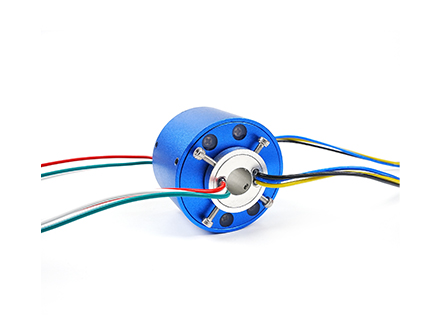
1. Electrical power slip rings
Electrical power slip rings are designed to transfer electrical energy between stationary and rotating components. They are commonly used in rotating machinery where a continuous power connection is required.
For wind turbine applications, power slip rings can support electrical connections within rotating assemblies and auxiliary systems. Their specifications should be selected according to rated voltage, current capacity, circuit quantity, insulation resistance, and operating temperature.
Key advantages:
Continuous electrical power transmission during rotation.
Multiple circuit configurations available.
Customizable current and voltage ratings.
Suitable for different industrial rotating systems.
2. Signal Slip Rings
Signal slip rings are designed to transmit control signals and electrical data between rotating and stationary components. In wind turbine systems, reliable signal transmission is important for monitoring equipment status and coordinating control functions.
These slip rings can be configured for different signal types, including analog and digital signals. Buyers should pay attention to electrical noise, contact resistance, shielding, and signal integrity when selecting a product.
Key advantages:
Reliable signal transmission during continuous rotation.
Support for multiple signal circuits.
Flexible configurations for control and monitoring systems.
Custom designs for specific electrical interfaces.
3. Fiber Optic Rotary Joints
Fiber optic rotary joints (FORJs) transfer optical signals between stationary and rotating components. They are particularly useful in systems that require high-speed data transmission, low signal attenuation, and immunity to electromagnetic interference.
In advanced wind turbine monitoring and communication systems, fiber optic rotary joints can support data transmission where conventional electrical contacts may not meet bandwidth or interference requirements.
Key advantages:
High-bandwidth optical signal transmission.
Immunity to electromagnetic interference.
Low signal attenuation when properly specified.
Suitable for specialized data transmission applications.
4. Hybrid Slip Rings
Hybrid slip rings combine different transmission technologies within one rotary assembly. Depending on the design, a hybrid unit may integrate electrical power circuits, signal channels, and fiber optic transmission.
This configuration can reduce the need for multiple independent rotary connection devices. For wind turbine equipment with complex electrical and communication requirements, hybrid slip rings provide greater integration flexibility.
Key advantages:
Combined power and signal transmission.
Optional integration of fiber optic channels.
Compact system integration.
Customizable circuit arrangements.
5. High-Current Slip Rings
High-current slip rings are engineered for applications requiring the transmission of relatively large electrical currents through rotating interfaces. Their design focuses on conductor capacity, contact materials, thermal management, and electrical safety.
For wind energy equipment, the actual current requirements depend on the electrical architecture and the specific rotating assembly. Buyers should confirm whether a high-current configuration is necessary instead of selecting a product based on current capacity alone.
Key advantages:
Designed for higher current transmission requirements.
Flexible conductor and contact configurations.
Optional customized cooling and structural designs.
Suitable for demanding industrial electrical applications.
How to Choose the Best Slip Ring for a Wind Turbine?
Selecting a suitable wind turbine slip ring requires a clear understanding of the equipment's electrical and mechanical requirements. The following factors should be considered during the purchasing process:
1. Voltage and Current Requirements
Check the rated voltage and operating current of the system. The slip ring must provide sufficient electrical capacity while maintaining appropriate insulation and thermal performance.
2. Number of Circuits
Determine how many power and signal circuits need to pass through the rotating connection. Additional circuits may be required for sensors, monitoring devices, and control systems.
3. Rotation Speed and Service Life
Evaluate the operating speed, rotation frequency, and expected service life. Contact materials and mechanical structures should be selected according to the actual operating conditions.
4. Environmental Protection
Wind turbines may operate in environments exposed to moisture, dust, temperature changes, and vibration. Appropriate sealing, insulation, and corrosion-resistant materials can improve product durability.
5. Customization and Installation
Consider the available installation space, shaft dimensions, mounting methods, and connection interfaces. A manufacturer offering OEM and ODM services can develop a slip ring configuration according to specific equipment requirements.
Why Work with a Custom Slip Ring Manufacturer?
Standard slip rings may not fully match the electrical and mechanical requirements of every wind turbine model. Custom Slip Ring manufacturers can adjust circuit numbers, current ratings, dimensions, connection methods, and housing structures according to project specifications.
Before purchasing, provide the supplier with technical drawings, electrical parameters, operating conditions, and installation requirements. This information helps engineers recommend a suitable rotary transmission solution.
The best slip ring for a wind turbine depends on its specific application and transmission requirements. Electrical power slip rings, signal slip rings, fiber optic rotary joints, hybrid slip rings, and high-current slip rings each serve different purposes.
For wind turbine manufacturers and industrial buyers, evaluating electrical performance, mechanical reliability, environmental protection, and customization capabilities is essential. Choosing the right slip ring solution can help improve system integration and support reliable long-term operation.