
Wind turbine pitch control systems play an important role in regulating blade angles according to changing wind conditions. By adjusting the pitch of the blades, the turbine can optimize energy capture, control rotational speed, and protect mechanical components during strong winds.
Since wind turbine blades rotate continuously while pitch control systems require electrical power and control signals, reliable rotary electrical connections are essential. Slip Rings provide a transmission interface between stationary and rotating components, helping maintain communication and electrical continuity throughout operation.
For wind turbine manufacturers, electrical engineers, and equipment procurement teams, selecting the right pitch control slip ring requires careful consideration of electrical specifications, mechanical design, operating environments, and service life.
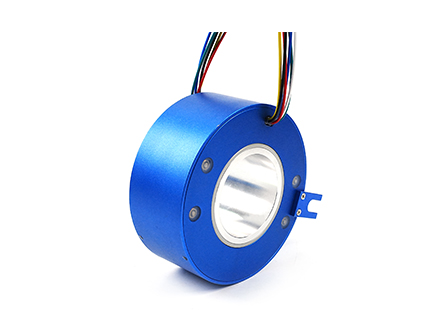
1. Understand the Role of Slip Rings in Pitch Control Systems
In a pitch-controlled wind turbine, each blade can adjust its angle to regulate aerodynamic forces and optimize turbine performance. Depending on the turbine design, electrical connections may be required between stationary and rotating sections of the system.
Slip rings can transmit power and control signals across these rotating interfaces. They help support communication with pitch control equipment, sensors, and other electrical components.
A suitable wind turbine pitch control slip ring should maintain stable electrical contact while accommodating continuous rotation and the mechanical conditions of the installation.
2. Check Voltage and Current Ratings
Voltage and current are two of the most important parameters when selecting a slip ring for wind turbine pitch control applications.
The required electrical capacity depends on the system architecture, including whether the slip ring transmits power to actuators, control electronics, or other components.
Before requesting a quotation, confirm the following specifications:
Rated operating voltage.
Continuous and peak current requirements.
Number of power circuits.
Insulation resistance.
Dielectric strength.
Allowable temperature rise.
Providing accurate electrical parameters helps the manufacturer select suitable conductor sizes, contact materials, and insulation structures.
3. Determine the Number of Signal Circuits
Modern pitch control systems may involve multiple sensors, control units, and monitoring devices. The slip ring must provide enough independent circuits to accommodate the required electrical connections.
Depending on the system design, transmission requirements may include digital signals, analog signals, feedback signals, and communication channels.
When selecting a multi-circuit slip ring, consider electrical isolation, signal interference, shielding requirements, and the possibility of future system upgrades.
4. Evaluate Rotation Speed and Mechanical Performance
Wind turbine slip rings must operate reliably under continuous rotational movement. Mechanical performance directly affects contact stability, wear characteristics, and maintenance requirements.
Important parameters include:
Rotational speed: Confirm the normal operating speed and maximum rotation speed.
Starting torque: Check whether the slip ring meets the mechanical requirements of the rotating assembly.
Contact materials: Evaluate wear resistance and electrical contact performance.
Vibration resistance: Consider vibration levels during normal operation and abnormal conditions.
Service life: Review expected operating hours and maintenance intervals under specified conditions.
5. Consider Temperature and Environmental Conditions
Wind turbines can operate in challenging environments, including offshore locations, coastal regions, and areas with significant temperature fluctuations.
Moisture, salt spray, dust, condensation, and vibration can affect electrical insulation and mechanical components. Therefore, the slip ring housing and sealing structure should be selected according to the installation environment.
For offshore wind turbines, buyers should pay particular attention to corrosion protection, sealing performance, material selection, and environmental testing requirements.
6. Check Installation Dimensions and Mounting Structure
Space limitations inside wind turbine assemblies can make slip ring dimensions an important selection factor. An unsuitable housing structure may complicate installation, maintenance, or integration with existing equipment.
Before ordering, confirm the following:
Outer diameter and overall length.
Shaft or through-bore dimensions.
Mounting flange and fixing positions.
Cable entry and exit directions.
Connector types and wiring arrangements.
Available installation and maintenance space.
Providing mechanical drawings or installation diagrams allows the manufacturer to evaluate compatibility and develop a suitable customized structure.
7. Evaluate Signal Integrity and Electrical Safety
Pitch control systems depend on accurate signal transmission to adjust blade angles and respond to changing operating conditions. Electrical noise, unstable contact resistance, or insulation problems may affect signal quality and system reliability.
Buyers should discuss contact resistance, insulation resistance, dielectric strength, shielding, grounding, and signal compatibility with the slip ring manufacturer.
Where sensitive communication signals are involved, engineers may also evaluate whether separate signal circuits or fiber optic transmission are more appropriate.
8. Choose a Manufacturer with Customization Capabilities
Different wind turbine manufacturers may use different pitch control architectures and installation configurations. A standard slip ring may not provide the required circuit arrangement, dimensions, or electrical performance.
Working with an experienced Custom Slip Ring manufacturer offers several advantages:
Customized voltage and current ratings.
Flexible power and signal circuit configurations.
OEM and ODM mechanical design services.
Customized mounting structures and connectors.
Engineering support based on technical drawings.
Testing and quality inspection according to agreed specifications.
Wind Turbine Pitch Control Slip Ring Selection Checklist
Before confirming a supplier or placing a purchase order, prepare a technical checklist to avoid specification mismatches.
| Selection Parameter | Information to Confirm |
|---|---|
| Electrical ratings | Voltage, current, insulation |
| Circuit configuration | Power, signal, and communication channels |
| Mechanical parameters | Dimensions, rotation speed, torque |
| Operating environment | Temperature, humidity, dust, corrosion |
| Installation | Mounting method, connectors, cable routing |
| Quality requirements | Testing, inspection, expected service life |
Selecting the right slip ring for a wind turbine pitch control system involves more than checking voltage and current ratings. Electrical circuit configuration, signal integrity, rotational performance, environmental protection, and installation dimensions all influence the final product selection.
For wind turbine manufacturers and renewable energy equipment suppliers, working with a Custom Slip Ring manufacturer can help ensure better compatibility with specific system requirements. Providing detailed electrical specifications and mechanical drawings is the first step toward obtaining a reliable rotary electrical transmission solution.